
Basic science research—often called fundamental or bench research—provides the foundation of knowledge for the applied science that follows. This type of research involves laboratory studies with cell cultures, animal studies or physiological experiments.
“Python Blood Studied for Weight-loss Remedy”
Reading a newspaper headline like this one often gives me mixed feelings: what does it mean; is it believable; who cares? Invariably, or at least very often, such an attention-getter headline comes from basic science research, partly because of the implied incredulity of the headline, and even of the story details. The results of basic science research are often not understood nor appreciated by the general public. Here are a few examples of some important basic science discoveries.
The Python’s Blood
The Burmese pythons, which have become the scourge of the Florida Everglades, are known to eat very large prey and then fast for many days or longer, even weeks. Researchers have found a substance, a metabolite labeled pTOS ( not to be confused with PTSD), that increases 1,000 times in python blood after a meal. When pTOS was purified and given to overweight mice, it acted as an appetite suppressant . They lost 9% of their weight in 28 days.
One of the University of Colorado researchers who has been studying pythons for ten years speculated that this appetite suppressant might avoid some of the side effects of the GLP-1 drugs.(like Ozempic-face). A Stanford University scientist cautioned that “it is too soon to tell if the metabolite will seamlessly translate to a human weight-loss drug, but it solidifies the power of studying extremes in the animal kingdom.” [Hopefully it won’t cause loved ones to hug too hard. “Elena, I know you love me but could you let me breath a little!”]
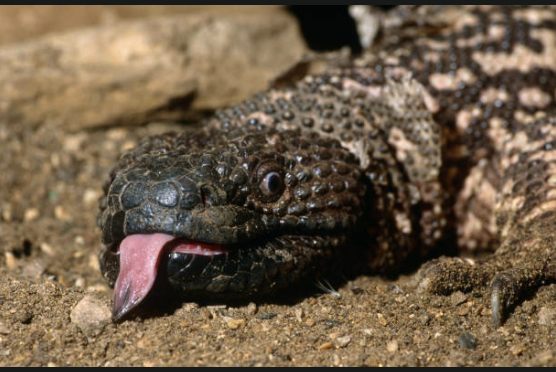
“Fun Fact”: One of the first-generations of GLP-1 drugs was a metabolite purified from the venom of a Gila monster !
“Ozempic Face”?
The Penicillium Mold
In 1928 Dr. Alexander Fleming, a bacteriologist in a Scottish hospital, noticed that some of his mistakenly uncovered Petri dishes growing Staph bacteria had clear circles where Staph did not grow. In the circle’s center was a colony of penicillium mold. He identified and purified the active substance from the mold, but it took twelve years of basic research by other scientists to mass produce enough penicillin to treat humans, e.g. soldiers in World War II. In World War I the death rate from bacterial pneumonia was 18%; in WW II it fell to less than 1%.
“Fun Fact”: More Union soldiers died in the Civil War from infection than from musket balls, shrapnel, or falling off their horse. (U.S. Grant’s tomb data, NYC)
COVID Vaccine Development
Not at all like penicillin’s development! DECADES of basic science research of SARS viruses years before COVID’s appearance led to the development of an effective COVID vaccine in just 11 months!
The SARS-CoV-2 virus causing COVID-19 was isolated and identified in 2019. The SARS-CoV-2 virus’s genetic sequence was identified and published in the scientific press on January 11, 2020. The first mRNA COVID vaccines were approved in December 2020.
The Virus Research Center of NIH had been doing and supporting basic research for decades on other SARS virus infections (MERS and RSV) using messenger RNA (mRNA) as the vehicle or “platform” for vaccine’s immunological effectiveness The Trump administration’s Operation Warp Speed in 2020 supported multi-national public and pharmaceutical organizations to manufacture the most promising 4 of 321 COVID vaccine candidates BEFORE their effectiveness was even known. Both Pfizer’s and Moderna’s mRNA C0VID-19 vaccines were the first FDA-approved mRNA vaccines. They were given to the first civilians in both the U.K. and U.S. in December 2020!
“Fun Fact”: The mRNA platform for vaccines is very flexible, quickly adaptable, can be tweaked easily in the lab, and can be manufactured quickly to keep up with the frequent genetic changes in the various COVID viruses and other epidemic-causing viruses.
“Not So Fun Fact”: The Trump administration has canceled $500 million of mRNA basic science research grants in his second term. (NPR radio, April 29, 2026)
“Not So Fun Fact”: Some international economists predict that the closure of the Hormuz Strait will cause as much world-wide economic loss as the COVID epidemic.
National Science Board Members Terminated
All 25 six-year-term members of the independent National Science Board, scientific advisors to the National Science Foundation (NSF) since 1950, were fired without explanation by the Trump administration on April 24, 2026. The board members are scientists and engineers from universities and industry and are appointed by the President. The NSF is a major supporter of basic science and technology research. Last year the NSF had to cancel 1,000 active research grants. The NSF Director’s chair remains empty since the previous chairperson resigned last year.

